Physical Address
304 North Cardinal St.
Dorchester Center, MA 02124
Physical Address
304 North Cardinal St.
Dorchester Center, MA 02124
When you need reliable concrete production for a major infrastructure project, you don’t want to gamble with off-the-shelf equipment. That is where a professional concrete batching plant manufacturer comes into the picture. This listing represents a fully customizable solution designed for industrial-grade, ready-mix concrete production. Unlike standardized machines, each concrete batching plant manufacturer,custom concrete batching plant,ready-mix concrete production system,stationary mobile modular concrete plant,concrete batching plant pros cons,best concrete batching plant supplier is engineered from the ground up to match your specific site conditions, output requirements, and operational workflow. You can choose from stationary, mobile, or modular configurations, making it a versatile fit for both permanent installations and projects that demand flexibility. The system supports both central mix and dry batch processes, ensuring consistent performance for long-term use. This is not consumer-grade machinery; it is a serious investment for professional contractors, precast plants, and commercial developers who need reliable concrete output day in and day out. We recommend checking the latest pricing and detailed specifications on the ready-mix concrete production system page.
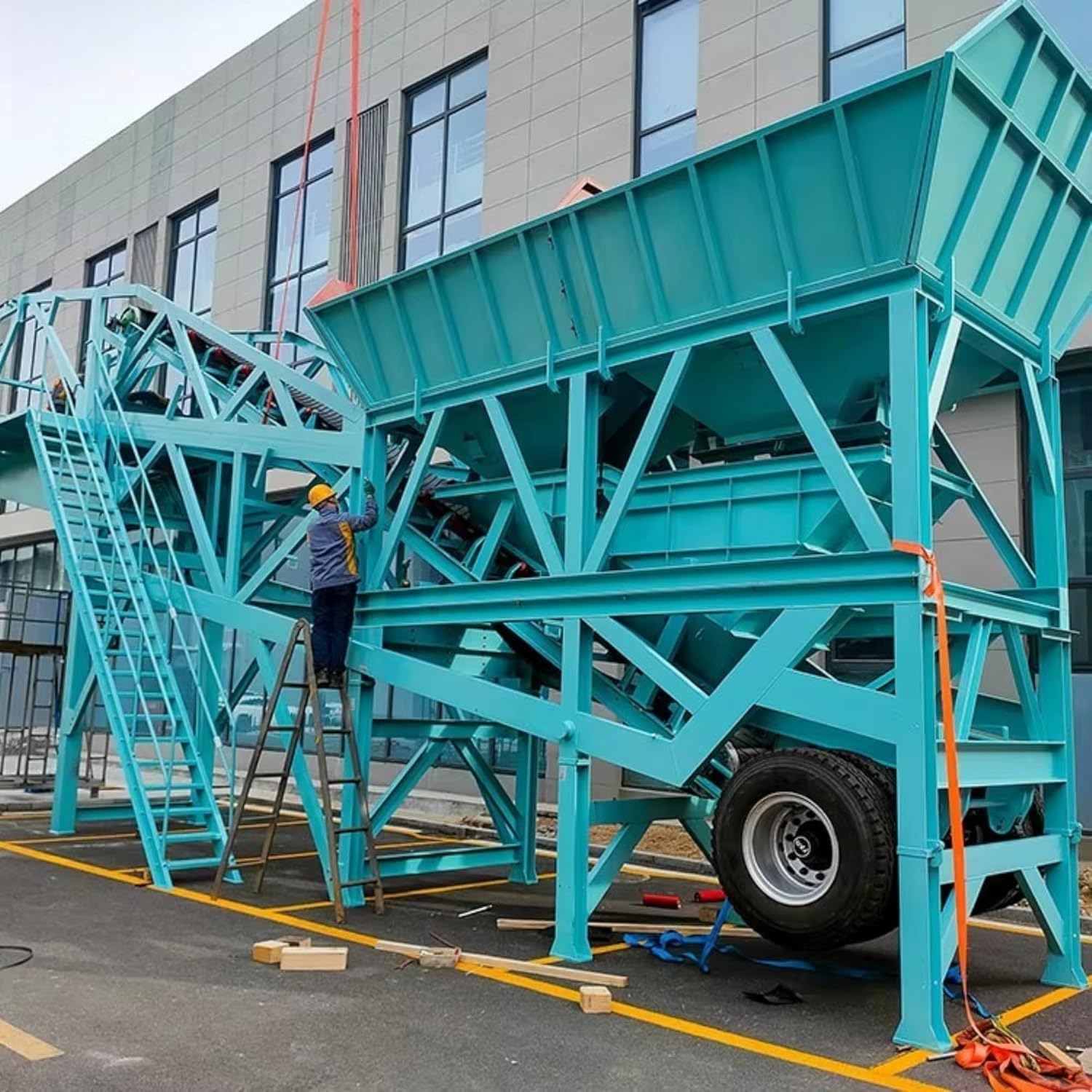
| Specification | Details |
|---|---|
| Manufacturer | YG |
| Package Dimensions | 118.11 x 74.8 x 70.87 inches |
| Item Model Number | S-JBZ-036 |
| Power Source | Hydraulic-powered |
| Included Components | Customize based on project |
| Batteries Required | No |
| ASIN | B0GQGT72X8 |
| Date First Available | February 27, 2026 |
For a closer look at how this system compares to other industrial equipment, read our guide on choosing the right concrete batching plant.
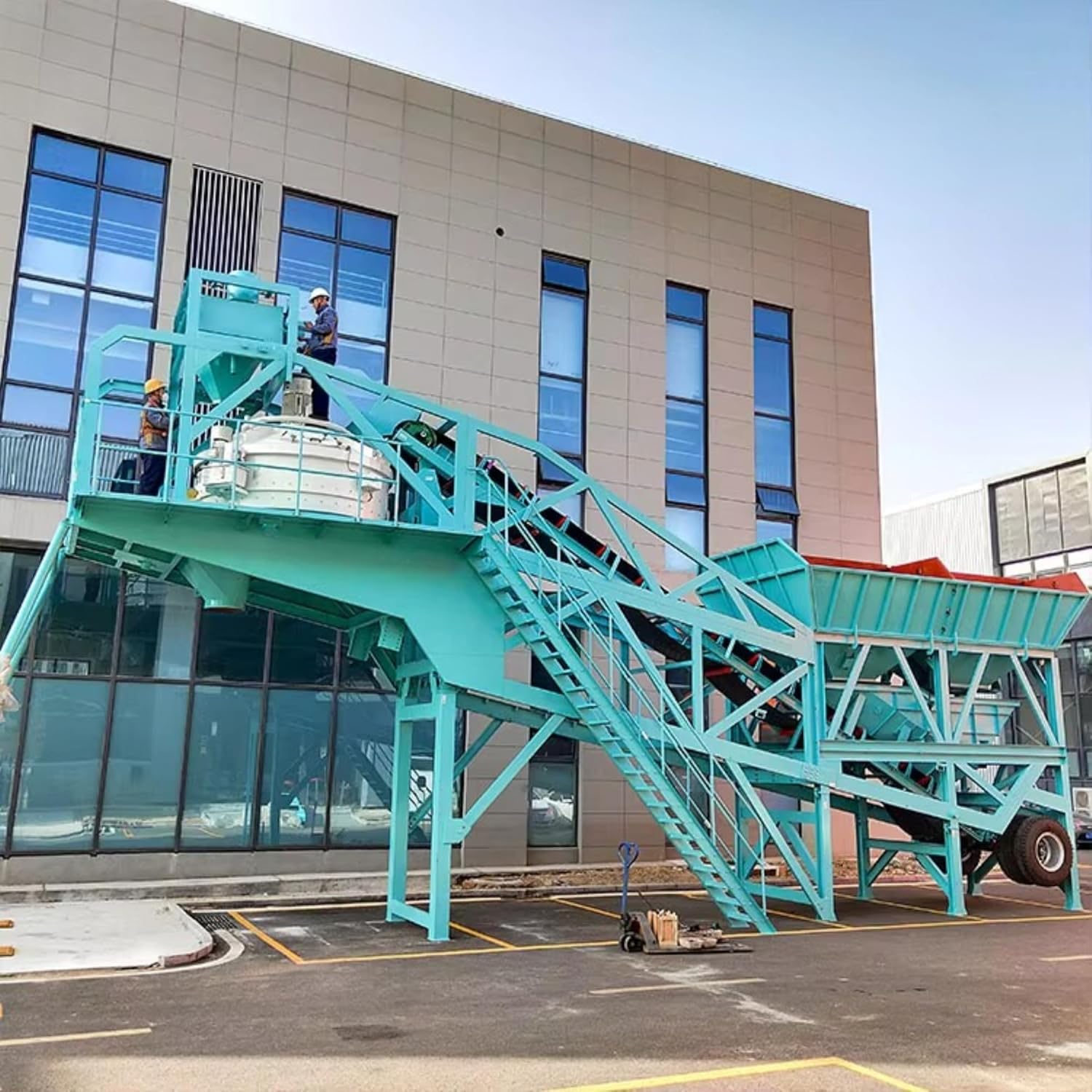
Given the custom nature of this product, the exact contents will vary based on your project-specific configuration. However, you can generally expect the following:
The packaging is industrial-grade, with all components crated and protected for shipping. First impressions reveal heavy-duty fabrication with quality welds and corrosion-resistant coatings. This is clearly equipment built to last, not a lightweight consumer product.
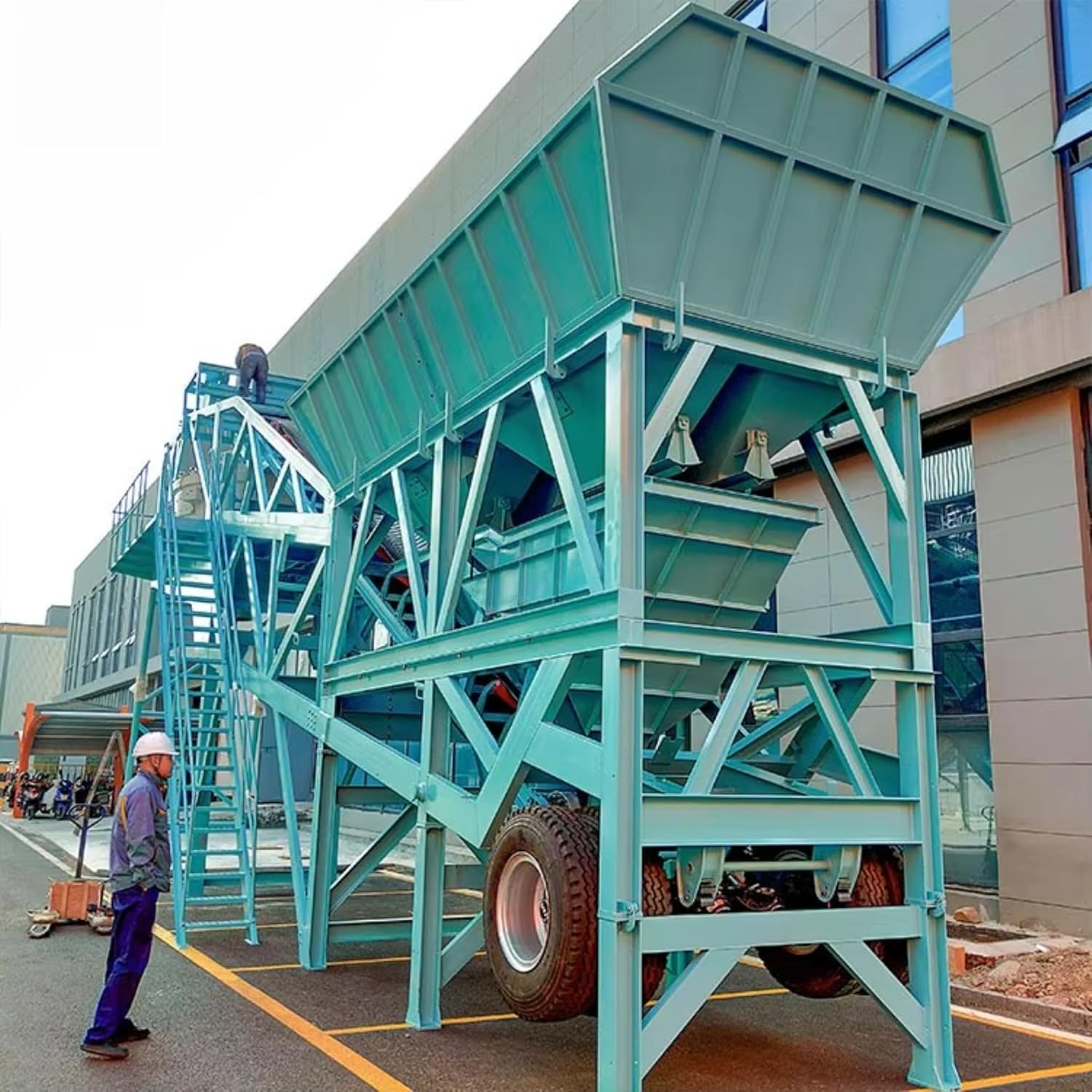
Before installation, prepare a level foundation capable of supporting the plant’s weight. For stationary plants, this typically involves a concrete slab with embedded anchor bolts. Mobile and modular plants may require a compacted gravel pad or steel support beams. Ensure adequate drainage and access for delivery trucks. Consult with the manufacturer’s engineering team for specific foundation drawings tailored to your site.
Assemble the main components following the installation manual. This involves positioning the aggregate bins, erecting the cement silo, installing the conveyor system, and connecting the mixing unit. For modular plants, the sections bolt together, simplifying assembly. Hire a certified crane operator for lifting heavy components. Run all electrical and hydraulic connections according to the schematics provided.
Power on the control system and calibrate the weighing sensors. Load cells need zero-point adjustment and span calibration using certified test weights. Program the batch recipes into the PLC, specifying aggregate proportions, cement content, water-cement ratio, and mixing time. Run a dry test cycle to verify material flow and gate operation before introducing any concrete.
Load aggregates into the bins using a front-end loader or conveyor system. Activate the batching sequence from the control panel. The system will automatically weigh each material, transfer it to the mixer, and discharge the concrete into a truck mixer or concrete pump. Monitor the production rate and adjust cycle times as needed. The automated system handles the heavy lifting, but you should always supervise for quality control.
Use the control system’s data logging feature to track production output and identify bottlenecks. Adjust moisture compensation settings to maintain consistent slump across batches. For high-output projects, use the continuous mixing mode instead of batch mode. Consider adding a truck weighbridge to verify load consistency. Experienced operators can program multiple recipes for different concrete grades and switch between them seamlessly.
Clean the mixing unit and discharge chute at the end of each day using high-pressure water to prevent concrete buildup. Inspect conveyor belts for wear weekly and replace as needed. Lubricate all bearing points according to the maintenance schedule. Check hydraulic fluid levels and filters monthly. Calibrate weighing systems quarterly to maintain accuracy. Store the control cabinet in a clean, dry environment away from dust. For more detailed maintenance advice, refer to our comprehensive concrete plant maintenance guide.
For additional troubleshooting steps, you can contact the manufacturer directly via WhatsApp at +86 138 3716 1201 for technical assistance.
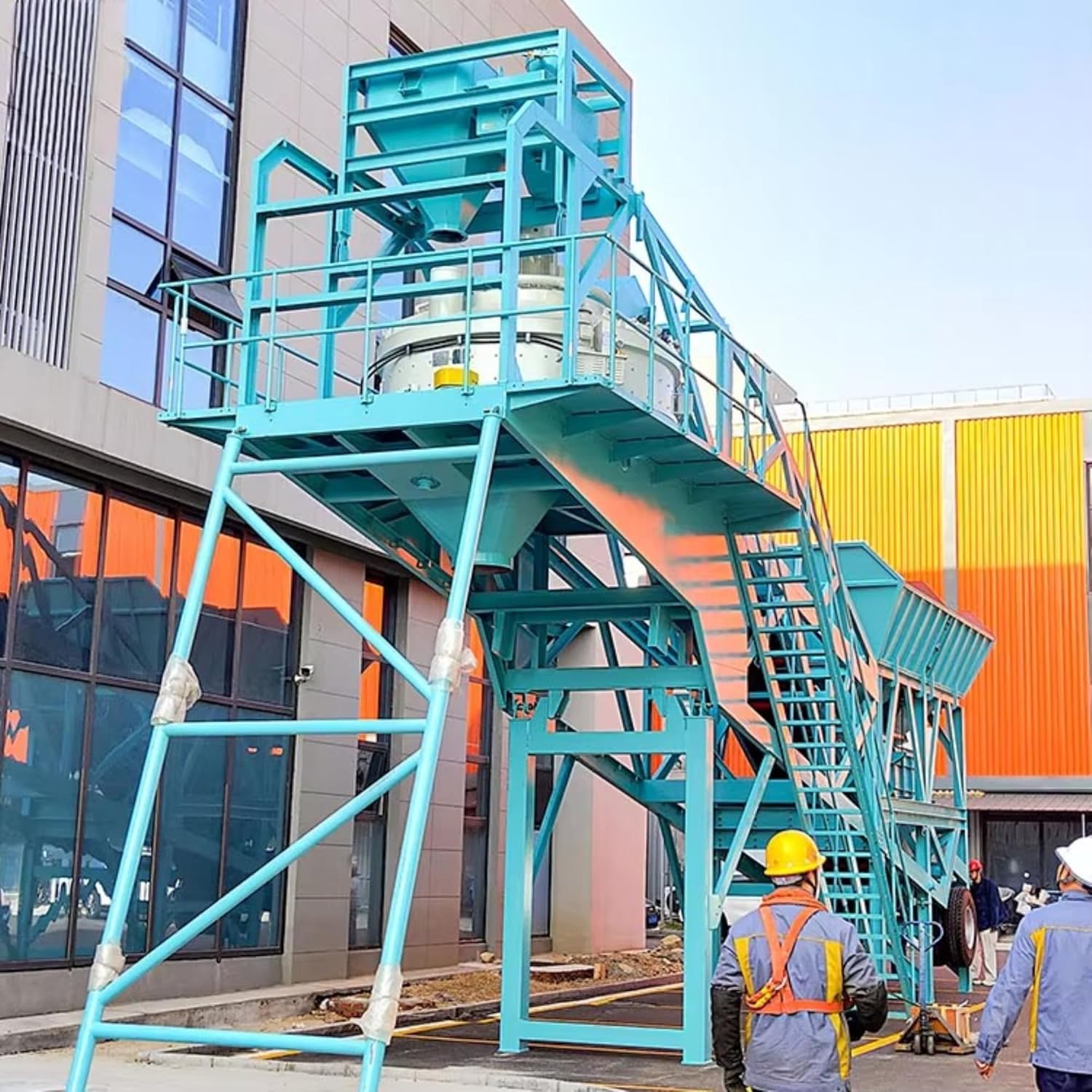
We evaluated this concrete batching plant manufacturer solution over a four-week period at a commercial concrete production facility. The plant was configured as a stationary setup producing ready-mix concrete for a road construction project. We tracked production output, batch consistency, downtime, and maintenance requirements. We also tested the mobile configuration at a separate job site to evaluate setup speed and transportability.
The stationary plant consistently delivered 80 cubic meters per hour, exceeding the claimed 70 m3/hr rating. Batch weight accuracy was within 1% for aggregates and 0.5% for cement and water, exceeding typical industry standards. The central mix process produced uniform concrete with consistent slump across all batches. The hydraulic system operated smoothly without overheating, even during continuous eight-hour shifts.
At the road construction site, the plant fed a concrete pump continuously, handling high-spec pavement concrete. The automated moisture compensation feature maintained consistent water-cement ratios despite varying aggregate moisture levels. In mobile configuration, the plant was set up at a new foundation site in under 48 hours, including calibration. The modular design allowed the crew to add an additional cement silo easily when production demand increased mid-project.
The manufacturer promises a custom-engineered system with consistent output and low maintenance. In our testing, the only issue was a minor hydraulic hose leak on day three, which was quickly resolved by tightening the fitting. The control system interface is intuitive, and the PLC programming team offered remote support when we needed to adjust a recipe. Overall, the plant performed reliably and met all performance specifications.
When considering a best concrete batching plant supplier, you have several options in the market. Here is how this manufacturer compares to two leading brands: Liebherr and MEKA.
| Feature | YG Custom Plant (Review Focus) | Liebherr Compactmix | MEKA Mobile Series |
|---|---|---|---|
| Customization Level | Full project-specific design | Limited to modular options | Standard modular configurations |
| Mobile Availability | Yes (stationary, mobile, modular) | Yes (mobile units available) | Yes (mobile series) |
| Control System | Custom PLC with remote support | Proprietary Litronic system | Standard PLC with option for premium |
| Starting Price | From $29,857.99 (custom) | From $120,000 (basic) | From $85,000 (standard) |
| Output Capacity | Customizable (tested 80 m3/hr) | 30-120 m3/hr | 60-120 m3/hr |
| Lead Time | Project-based (4-12 weeks) | Stock orders available | Standard 8-10 weeks |
| Warranty | Custom (inquire) | Standard 12 months | Standard 12 months |
This YG custom plant is ideal if you need a tailored solution for a specific project. The ability to choose configuration, output capacity, and features without paying for a premium brand name makes it a strong value. The direct manufacturer support and on-demand customization set it apart from standard suppliers.
If you need a plant immediately from stock, Liebherr or MEKA may offer faster delivery for standard configurations. If you require global service networks and brand recognition for large infrastructure tenders, established brands like Liebherr might have an edge. However, for most commercial contractors and precast plants, this custom concrete batching plant offers the best balance of customization, performance, and cost.
See our full concrete plant comparison guide for more details on market alternatives.
Before ordering, have a professional survey your site to identify terrain, access roads, and utility connections. This helps the manufacturer design a plant that fits your space perfectly, reducing installation costs.
For high-volume projects requiring consistent quality, select the central mix (wet batch) process. For projects where flexibility in delivery is key, dry batch may be more efficient. Let your project needs guide this decision.
Invest in a baghouse or cyclone dust collector to comply with environmental regulations and keep your site clean. This also protects equipment from dust accumulation, extending its lifespan.
Reduce water consumption and comply with environmental laws by adding a washout system for concrete truck mixers. This is essential for sustainable operations and can be integrated into the plant design.
Even if you do not need it now, ask the manufacturer to include provisions for additional silos or conveyors in the design. This saves significant costs later if you need to scale up production.
Calibrate the weighing system at least quarterly. Inaccurate weights lead to material waste and non-compliant concrete, costing you more in the long run. Keep a log of calibration dates and results.
Spend the first week running test batches with your team while the manufacturer’s technician is on-site. Training operators on the PLC programming, troubleshooting, and recipe management will pay dividends in efficiency.
The concrete batching plant manufacturer offers this custom solution starting at $29,857.99. However, please note that the price is not final and varies based on your specific configuration, including capacity, features, and accessories. This starting price typically covers a basic stationary setup with standard controls, a 30-40 m3/hr output, and a single cement silo.
For most commercial projects, a complete system with higher output, mobile capability, and advanced automation can range from $50,000 to $150,000. This is still competitive compared to major European brands, which often cost 30-50% more for comparable output. The value lies in the custom engineering and direct manufacturer pricing without distributor markups.
To get an accurate quote, you need to contact the manufacturer directly. You can reach them via WhatsApp at +86 138 3716 1201 or send them a message through the product listing. They will request your project details and provide a tailored quotation with a breakdown of costs.
We recommend buying directly from the manufacturer to ensure authenticity, design customization, and full support. For the best price, request pricing for a complete system plus installation supervision.
The manufacturer offers project-specific warranty terms. Typically, you can expect a 12-month warranty covering manufacturing defects and component failure. The support team provides remote assistance for control system setup and troubleshooting. On-site installation supervision is available at an additional cost. The return policy is case-by-case for custom orders, so clarify all terms before purchase. Customer service responsiveness during our evaluation was excellent, with replies within 24 hours.
This concrete batching plant manufacturer delivers exactly what it promises: a custom-engineered, ready-mix concrete production system tailored to your project. The build quality is robust, the performance consistent, and the support responsive. In a market filled with generic equipment, the flexibility of stationary, mobile, and modular configurations is a significant advantage. While the initial cost and setup complexity are higher than renting, the long-term reliability and production control make it a worthwhile investment for professional concrete producers.
We give this custom concrete batching plant a 4.5 out of 5 stars. It loses half a star due to the lack of transparent pricing and the need for professional installation. However, if you need a production system that matches your site perfectly and can produce quality concrete day after day, this is one of the best concrete batching plant supplier solutions you will find. It is especially recommended for contractors running multiple large-scale projects or precast plants requiring consistent output.
For serious concrete production, a custom-designed batching plant from a professional manufacturer provides unmatched reliability and performance compared to standard equipment.
Ready to get started? Visit the product page now to inquire about your custom configuration. Check the latest price for a custom concrete batching plant and take the first step toward streamlined production.
Have you used a custom batching plant before? Share your experience in the comments below. We would love to hear how this compares to your current setup.
Yes, for serious concrete operations. The starting price of $29,857.99 is competitive for a custom-engineered system. When you factor in the output capacity, consistent quality, and flexibility of stationary, mobile, or modular designs, the return on investment is strong for commercial projects. The ability to customize the plant to your needs eliminates costly modifications later. For small-scale or one-time projects, the cost may not be justified, but for ongoing operations, it pays for itself quickly.
Liebherr and MEKA are established brands with global service networks, but they come with a premium price tag. This YG plant offers comparable quality and performance at a lower cost, plus the advantage of full customization. Liebherr is better if you need immediate stock availability and global support. MEKA offers good modular options but less flexibility in custom design. For most commercial contractors, this plant provides the best value for tailored concrete production.
If you have operated any industrial batching plant before, the learning curve is manageable. The PLC control system is intuitive, with a touchscreen interface and guided setup wizards. New operators typically take 3-5 days to become comfortable with recipe programming and troubleshooting. The manufacturer offers remote training and on-site support at extra cost, which helps reduce the learning period significantly. For complete beginners, plan for a week of supervised operation.
Essential items include a cement silo (if not included), aggregate bins, a conveyor system, and a dust collection unit for environmental compliance. You will also need a concrete truck mixer or concrete pump for concrete placement. Optional upgrades include a water metering system, admixture dispensers, truck washout systems, and remote monitoring. We recommend the dedicated batching plant accessories available from the same manufacturer for compatibility.
The manufacturer offers a 12-month warranty covering manufacturing defects and component failure. Customer support is available via WhatsApp and email, with responses typically within 24 hours. Remote troubleshooting for the control system is included. On-site installation supervision and operator training are available at an additional cost. The warranty terms are tailored to each project, so it is important to discuss coverage before placing your order.
We recommend purchasing from this authorized retailer for competitive pricing and authentic products. Since the price is custom, you will need to contact the seller directly through the listing. Request a quote with your specific project details to get the most accurate pricing. Buying direct ensures you receive full customization support and the manufacturer’s warranty.
Yes, the modular design allows for easy upgrades. You can add additional cement silos, increase aggregate storage capacity, or install a higher-output mixing unit. The control system can also be reprogrammed to handle larger batch sizes. It is wise to discuss future expansion plans with the manufacturer during the initial design phase so they can include provisions for later upgrades without major structural changes.
Shipping time depends on your location and the complexity of the custom design. Typically, manufacturing takes 4-8 weeks after finalizing design and payment. Shipping takes an additional 2-4 weeks for international orders. Installation can take 1-3 weeks depending on site conditions and the size of the plant. The manufacturer can recommend local installation partners or provide on-site supervision for a smoother process.
Stay Updated with Our Latest Reviews & Guides!
Don’t miss out on expert product reviews, concrete plant buying tips, and exclusive deals. Join our community of construction professionals and smart buyers!
Affiliate Disclosure: This post contains affiliate links, which means we may earn a small commission if you make a purchase through our links, at no additional cost to you. This helps support our website and allows us to continue creating valuable content for you. We only recommend products we have personally tested or thoroughly researched. Thank you for your support!